

SoftNet: white-label banking app migration to Flutter


Migrating SoftNet's white-label mobile banking app, used by 85+ cooperative banks, to Flutter without a release freeze
SoftNet wanted to move its banking app without stopping releases. We migrated their mobileNet app screen by screen with Inlay, our open-source add-to-app framework, and Converge, our AI-native migration planner, rolling out corporate banking, BLIK, and other features.Migrating SoftNet's white-label mobile banking app, used by 85+ cooperative banks, to Flutter without a release freeze
SoftNet wanted to move its banking app without stopping releases. We migrated their mobileNet app screen by screen with Inlay, our open-source add-to-app framework, and Converge, our AI-native migration planner, rolling out corporate banking, BLIK, and other features.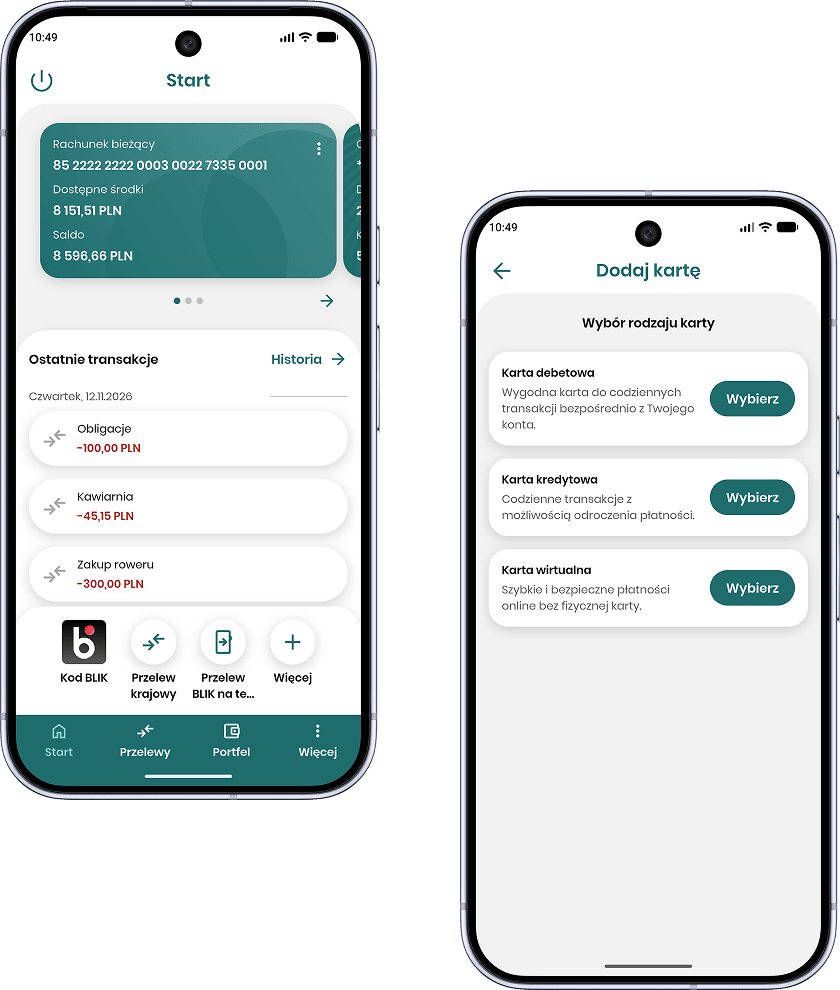
 Flutter
About the Client
About the App
Challenges

One white-label app serving 85+ cooperative banks
One white-label app serving 85+ cooperative banks

Two native codebases that drifted apart over the years
Two native codebases that drifted apart over the years

Migrating while 85+ banks keep using the app every day
Migrating while 85+ banks keep using the app every day

Why a step-by-step migration instead of a full rewrite
Why a step-by-step migration instead of a full rewrite

An accessibility gap ahead of the European Accessibility Act
An accessibility gap ahead of the European Accessibility Act
SoftNet's native banking app moved to Flutter. For 85+ banks. Bank by bank. With no release freeze.

Key features
Corporate banking: batch transfers and signatures
Polish transfers and BLIK
Currency exchange
Card management
Accounts, loans, deposits and history
Business users browse transfer batches, check details, and sign them in the app, with push notifications for operations awaiting approval. The module was built from scratch in Flutter and became the first add-to-app entry point into the native app, within the same white-label app for every bank.
Solutions
Flutter add-to-app: a new module first, then the existing app
Inlay: our open-source framework for the native-Flutter boundary
Converge: a migration plan built from the existing code
Bank-by-bank rollout behind feature flags
One design system for 85+ bank brands, accessible by default
A mixed team that leaves Flutter knowledge behind
Flutter add-to-app: a new module first, then the existing app
We started where the risk was lowest. First, we built a brand-new corporate banking module in Flutter and added it to the native apps with add-to-app, with no existing code to migrate. Then a self-contained flow with a single entry point from the native app. Only once Flutter had proven itself did we start migrating the existing retail banking app screen by screen.
Inlay: our open-source framework for the native-Flutter boundary
Every add-to-app migration needs a bridge between native and Flutter code. We built it once as Inlay, LeanCode's open-source Flutter add-to-app framework, and proved it on mobileNet's native apps. It provides type-safe navigation in both directions with generated Dart, Swift, and Java code, shared state between native code and Flutter engines, and automatic engine management. This lets each screen move to Flutter on its own, with no custom glue code to maintain.
Converge: a migration plan built from the existing code
Converge, LeanCode's AI-native migration planning tool, reads both mobileNet codebases and pairs every screen between iOS and Android, grouping them into migration waves ordered by dependencies, with an estimate per wave and an end date for a given team size. After each sprint, it re-reads the code, so progress, pace, and the end date come from the code, not from memory. SoftNet and LeanCode can see real progress at any time and plan the next wave on facts, not guesses.
Bank-by-bank rollout behind feature flags
Each migrated flow ships behind a feature flag controlled per bank. A new screen goes live in one pilot bank, then in a few more, then everywhere, and can be switched back without a new release. Once every bank runs the Flutter version, the paired native classes are deleted from both apps. Banks get new screens without risking their customers, and the codebase shrinks with every step instead of growing.
One design system for 85+ bank brands, accessible by default
Instead of maintaining two UIs, we built one shared Flutter design system used across the whole migrated app. Bank colors come from the native host app, so one component serves every bank variant. Every screen rewritten in Flutter follows WCAG, so we make each accessibility fix once for both platforms.
A mixed team that leaves Flutter knowledge behind
LeanCode engineers work alongside SoftNet's developers, who join the migration team in rotations and learn Flutter on real banking flows. The Flutter integration sits behind a build flag, so SoftNet's native team keeps its own build and pace while the migration runs.


Results
Most of the retail app already runs on Flutter
Seven months after the first line of Flutter code, most of the mobileNet retail banking app is already rebuilt in Flutter, and the full migration is forecast to finish in January 2027.
From one pilot bank to every bank in three weeks
The first migrated flows went live in one pilot bank and reached every bank within three weeks. Every flow since has followed the same path: one pilot bank, a few banks, all banks, then the native code is deleted.
A migration plan that comes from the code, every sprint
Converge made the migration measurable. It flagged behavior differences between the two platforms before work started, so they settled them once as product decisions instead of discovering them mid-sprint. It re-forecasts the end date after every sprint from the team's real pace. Management gets a one-page summary, the delivery lead a wave plan, and developers a screen-by-screen list.
Better accessibility and parity on both platforms
Every migrated screen meets WCAG, so accessibility is fixed once for both platforms. Android and iOS users of all SoftNet banks now get the same features and behavior, built on one design system, one set of business rules and one Flutter codebase for 85+ bank variants.
Review of our work with SoftNet

LeanCode successfully migrated most of the retail app to Flutter, enabling us to cut tens of thousands of lines of duplicated native code. They brought their own tooling, including Inlay - their open-source framework for connecting native and Flutter code.


LeanCode successfully migrated most of the retail app to Flutter, enabling us to cut tens of thousands of lines of duplicated native code. They brought their own tooling, including Inlay - their open-source framework for connecting native and Flutter code.
Other applications


Credit Agricole Bank Polska


Kontomierz


M-Check
Let's schedule a 20-minute talk!



This is the initial scoping call with one of our experts. Its purpose is to get a better understanding of what you want to build. After this call, you will have an idea about your project's feasibility and the ballpark estimates.